Encounters That Changed Us: Reflections from the International CoP Gathering in Puerto Rico
Our journey to Puerto Rico for the International CoP gathering became far more than a conference. It turned into a time of connection, learning, and shared experiences. Over the course of the week, this phrase from one of our keynote speakers, “Not a Monolith, A Multitude,” kept coming back to us. It surfaced in presentations, conversations, and in what we saw and experienced together. It became a helpful way to name what we were encountering: no culture, community, or person can be reduced to a single story.
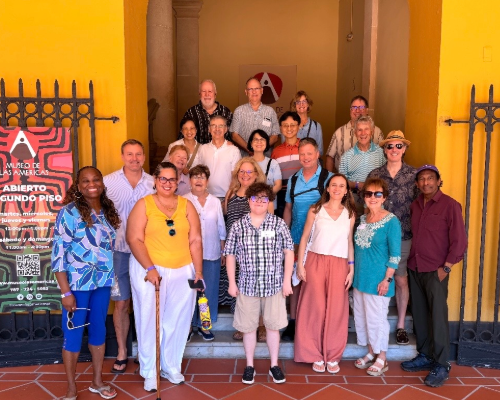
We began at Grace Lutheran Church, gathering as a group that has been learning together over time while also welcoming new colleagues and family members. That mix felt important. There was familiarity, but also fresh energy. The sessions, including those led by local speakers, gave us space to think and reflect. However, the time in between, the conversations, the meals, and the simple act of being together, was just as meaningful.
Our visit to Museo de Las Americas offered a deeper sense of Puerto Rico’s story. Moving through the exhibits, we encountered the intertwined histories of Indigenous, African, and Spanish peoples. The stories were complex and, at times, difficult, yet marked by resilience and creativity. As we reflected together afterward, many of us became more aware of how quickly we form assumptions and how much we miss when we do
Lee Ann Rathbun put this into words in a way that resonated with many of us: “I will forever be impacted by the spirit of hospitality and resilience of each person we encountered. The sensory experience of the beauty of the island and culture within the painful context of a history of oppression was a reminder of how I want to engage students with reverence and curiosity about who they are in the context of their lives.”
That sense of learning through experience stayed with us. Puerto Rico was not something we simply studied. It was something we encountered with all our senses. Spending time learning about Taíno history and spirituality added another layer. Rather than just information, it raised questions for us about how identity, memory, and connection to place shape how people understand meaning, suffering, and healing. It led us to think about how often these deeper layers remain unspoken and how important it is to make room for them.
Linda Wilkerson reflected: “Expanding my knowledge of the cultures of the Americas, particularly Taíno culture, assists me as an educator in valuing the richness of the spiritual spectrum rooted in our common humanity and desire to connect to the transcendent.”
Her reflection names something many of us felt: a widening of perspective alongside a recognition of shared human longing. We also became more aware of the African influences within Puerto Rican culture, especially through music and rhythm. These experiences reminded us that meaning is not always expressed through words. It can be carried through movement, sound, and shared practices that hold deep cultural and spiritual significance.
Our visit to Caguana Indigenous Ceremonial Center was one of those moments that is hard to fully describe. Walking among the archaeological remains of the original Taíno people, there was a quiet sense of being in a place where history still feels present. It invited a kind of attentiveness that is not easy to put into words.
Later, we traveled to Finca Remedio in the mountains, a simple off-grid retreat. The setting itself encouraged us to slow down.
As Ted Hodges reflected: “Having three local speakers, visiting the archaeological remains of the original Taíno people, sharing a homemade meal in a mountainside home, and sitting together under a tin roof as rain poured and lightning flashed, all of these and more helped all of us feel like one family. We are so glad to be a part of ACPE, which originally brought us together.”
His reflection captures something many of us experienced but struggled to name. There was a sense of being part of something larger than the schedule or the sessions, something rooted in shared presence.
Ken Ramsey expressed a similar feeling: “The content of the meetings was powerful, but what I encountered transcended content. The combination of tapping my toes into rich spiritual frameworks different than my own, the depth of the hospitality, the fellowship, and the opportunity for increased attunement to the natural world, I have been changed.”
As we came to the end of our time together, it was clear that we were leaving with more than notes or ideas. We were leaving with relationships, with moments that will stay with us, and with a renewed attentiveness to the people we encounter in our work.
The phrase stayed with us: not a monolith, but a multitude. It continues to invite us to slow down, to notice more, and to resist easy assumptions.
Perhaps most importantly, our experience in Puerto Rico invited us to move toward a shared spirit of collaboration, grounded in humility and our common call to spiritual care and integrative spiritual education.
Jacob George serves as an affiliate faculty member at Phillips Theological Seminary in Tulsa.